Breast augmentation is one of the most popular cosmetic procedures worldwide, helping individuals achieve fuller, more balanced, and aesthetically pleasing breasts. However, many people use the terms breast augmentation and breast implants interchangeably, even though they do not mean exactly the same thing. Understanding the difference is essential when researching treatment options and discussing goals with a plastic surgeon.
Breast augmentation refers to the overall procedure used to enhance the size, shape, and appearance of the breasts. Breast implants are one of the tools commonly used to achieve that enhancement. In recent years, fat transfer techniques have also become a popular alternative for certain patients seeking more natural-looking results.
This article is for informational and educational purposes only and should not be considered medical advice, diagnosis, or treatment.
What Is Breast Augmentation Surgery?
Breast augmentation, medically known as augmentation mammoplasty, is a cosmetic surgical procedure designed to increase breast volume, improve breast symmetry, restore fullness lost after pregnancy or weight loss, and enhance overall body proportions.
The primary goal of breast augmentation is to help patients achieve their desired breast size and shape while maintaining a natural appearance that complements their body structure. Many individuals also choose the procedure to improve self-confidence and body image.
The surgery is typically performed under general anesthesia and usually takes between one and two hours. During the procedure, the surgeon either places breast implants into a carefully created pocket or injects purified fat into the breast tissue. Incisions are generally made in discreet locations, such as:
- Under the breast fold (inframammary incision)
- Around the areola
- In the armpit area
Recovery varies from patient to patient, but most individuals can return to light daily activities within one to two weeks. Swelling gradually subsides over several months, revealing the final results.

What Types of Breast Implants Are Available?
Breast implants are the most common method used in breast augmentation surgery. Today’s implants come in a wide range of sizes, shapes, and materials, allowing surgeons to customize results based on each patient’s anatomy and aesthetic goals.
Saline Implants
Saline implants are filled with sterile saltwater. They are inserted empty and filled after placement, which allows for smaller surgical incisions.
Advantages include:
- Smaller incision size
- Safe absorption of saline if rupture occurs
- Adjustable filling during surgery
However, saline implants may feel firmer and can sometimes create visible rippling, especially in patients with thin breast tissue.
Silicone Implants
Silicone implants contain a cohesive silicone gel designed to mimic the feel of natural breast tissue.
Benefits include:
- Softer texture
- More natural appearance
- Reduced visible rippling
- Wide range of shapes and profiles
Silicone implants remain one of the most popular choices due to their realistic look and feel.
Gummy Bear Implants
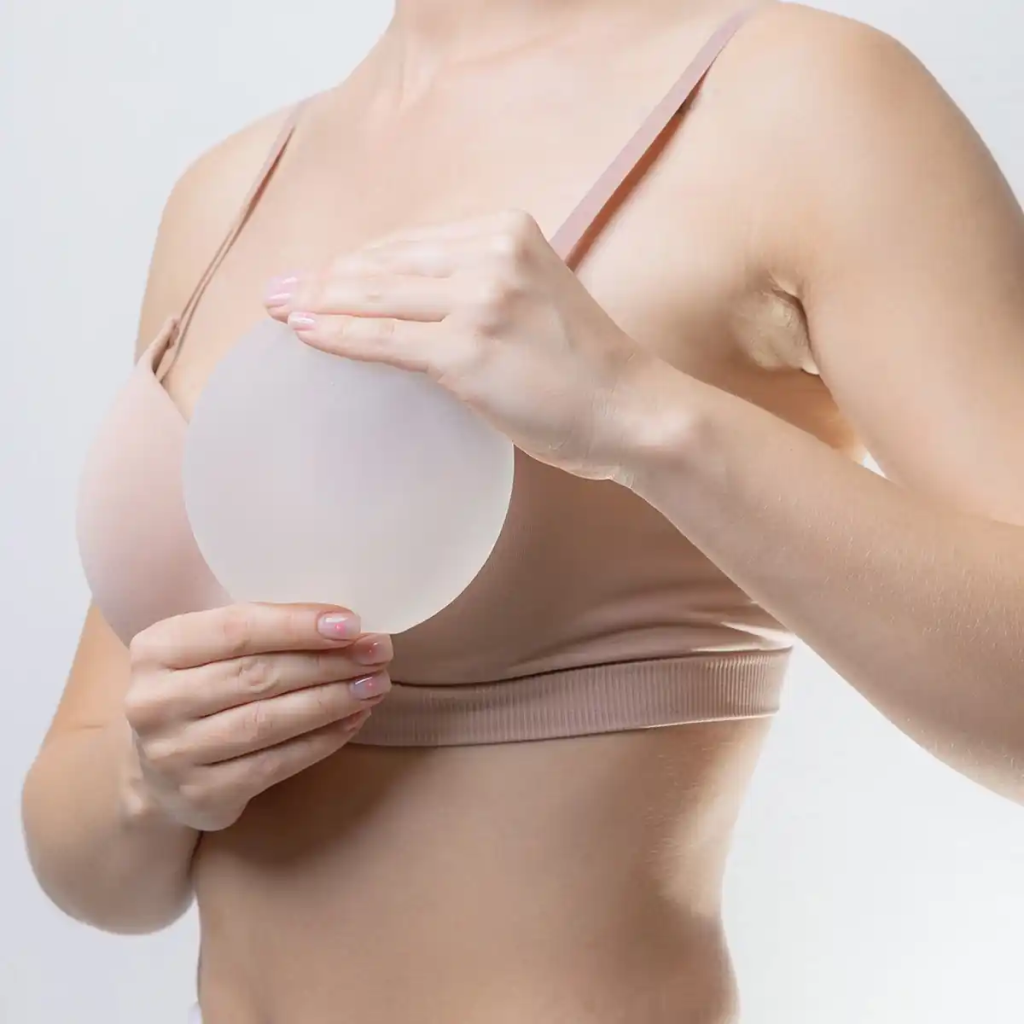
Also known as form-stable implants, gummy bear implants contain highly cohesive silicone gel that maintains its shape even if the implant shell becomes damaged.
Advantages include:
- Excellent shape retention
- Reduced risk of leakage
- Natural breast contour
- Lower likelihood of rippling
These implants are often available in anatomical or teardrop shapes for patients seeking a subtle and natural breast slope.
Implant Shapes and Profiles
In addition to implant materials, patients can choose between:
- Round implants
- Teardrop (anatomical) implants
- Low-profile implants
- Moderate-profile implants
- High-profile implants
The ideal option depends on body proportions, chest width, existing breast tissue, and desired outcome.

Breast Augmentation with Implants vs Fat Transfer
While implants remain the most common breast augmentation method, fat transfer has emerged as an attractive alternative for patients seeking natural enhancement.
Fat transfer breast augmentation involves removing fat from another area of the body through liposuction, purifying it, and injecting it into the breasts.
Volume Enhancement
One of the biggest differences between implants and fat transfer is the amount of volume that can be achieved.
Breast implants can increase breast size significantly, often by multiple cup sizes. Fat transfer typically provides a more subtle increase, usually around half to one cup size.
Natural Feel and Appearance
Fat transfer uses the patient’s own tissue, making the results exceptionally natural in both appearance and texture.
Modern silicone implants can also provide natural-looking results, but patients with very little breast tissue may occasionally feel the implant edges.

Scarring
Implants require surgical incisions, although they are generally small and strategically placed.
Fat transfer involves tiny liposuction and injection entry points, resulting in minimal visible scarring.
Longevity
Implant results are long-lasting but may require replacement or revision surgery in the future.
With fat transfer, the fat cells that successfully establish a blood supply become permanent. However, some transferred fat is naturally reabsorbed by the body, which may require additional sessions.
Additional Benefits
Fat transfer offers the added advantage of body contouring through liposuction. Areas such as the abdomen, thighs, or flanks can be slimmed while enhancing breast volume.
Implants, on the other hand, offer greater predictability and more dramatic volume increases.

Which Option Is Right for You? Breast Implants or Augmentation?
Choosing between breast implants and fat transfer depends on your personal goals, anatomy, and lifestyle preferences.
Breast implants may be the better option if you:
- Want a significant increase in breast size
- Desire highly predictable results
- Have limited body fat available for transfer
- Prefer a wider range of shape and size options
Fat transfer may be ideal if you:
- Prefer a completely natural approach
- Want subtle enhancement
- Have sufficient fat reserves
- Wish to avoid synthetic materials
Many patients also benefit from a hybrid approach that combines implants with fat transfer. This technique can provide substantial volume while improving softness, contour, and overall natural appearance.
Ultimately, the difference between breast implants and breast augmentation lies in the terminology.
Breast augmentation is the procedure itself, while breast implants are one of the most common methods used to achieve the desired result.
Whether you choose implants or fat transfer, the key to a successful outcome is working with an experienced plastic surgeon who can create a treatment plan tailored to your unique goals and anatomy.
Contact us today to learn more about breast implants, fat transfer breast augmentation, recovery expectations, and the option that best suits your goals.