A bright, white smile can boost confidence and leave a lasting impression. For many people, teeth whitening is one of the quickest ways to enhance their appearance.
However, common questions remain: How long do results last? Is the procedure safe? Understanding science, procedure, and aftercare can help you achieve a radiant smile safely and maintain results for as long as possible.
How Long Does Teeth Whitening Last?
The longevity of teeth whitening results varies depending on the type of treatment, lifestyle habits, and oral care routine.
Professional in-office whitening typically lasts 1 to 3 years with proper care. Because dentists use stronger whitening agents and protective techniques, results tend to be more dramatic and longer lasting.
At-home kits and over-the-counter products usually maintain brightness for 4 to 6 months before touch-ups are needed.
Factors that influence longevity
- Dietary habits: Coffee, tea, red wine, cola, and deeply pigmented foods can stain teeth quickly.
- Smoking and tobacco use: Nicotine causes yellowing and reduces whitening durability.
- Oral hygiene: Brushing twice daily, flossing, and regular cleanings help maintain brightness.
- Age & enamel thickness: Younger individuals with thicker enamel often experience longer-lasting results.
- Maintenance habits: Whitening toothpaste, touch-up gels, and avoiding staining drinks can extend results.
Heavy coffee or tea drinkers may notice fading within six months. Using a straw for dark beverages and rinsing your mouth afterward can help preserve results.

What is Teeth Whitening?
Teeth whitening is a cosmetic dental procedure designed to lighten tooth color and remove stains or discoloration. It uses bleaching agents — typically hydrogen peroxide or carbamide peroxide — to break down stain molecules into smaller particles, making teeth appear brighter.
Types of whitening
Vital whitening:
Performed on teeth with live nerves. This is the most common method and can be done in-office or with dentist-supervised home kits.
Non-vital whitening:
Used for teeth that have undergone root canal treatment and become discolored internally.
Whitening works by penetrating the enamel and targeting:
- Extrinsic stains (surface stains from food, beverages, tobacco)
- Intrinsic stains (deep discoloration caused by aging, trauma, or medications)
Over time, enamel naturally thins, revealing the yellow dentin beneath. Whitening reverses discoloration by oxidizing pigments.
Important: Yellow stains respond best to whitening, while gray or brown discoloration (e.g., from tetracycline use) may be more resistant.
Is It Safe to Whiten Your Teeth?
Yes, teeth whitening is generally safe when performed correctly by a dental professional or with approved at-home products. These treatments have been widely studied and used for decades.
Common temporary side effects
- Tooth sensitivity
Caused by temporary pulp irritation; typically resolves within a few days. - Gum irritation
May occur if whitening gel contacts soft tissues.
Professional treatments minimize these risks by using protective barriers and controlled application.
Important safety considerations
- Whitening does not damage enamel when used correctly.
- Overuse or unapproved DIY methods can cause irritation or enamel abrasion.
- Activated charcoal and abrasive home remedies lack scientific evidence and may harm teeth.
- Whitening does not affect crowns, veneers, or fillings and may create shade differences.
- Pregnant or breastfeeding individuals are advised to postpone whitening due to limited research.
Consulting a dentist before treatment is essential, especially for patients with sensitivity, restorations, or gum disease.

Teeth Whitening Procedure
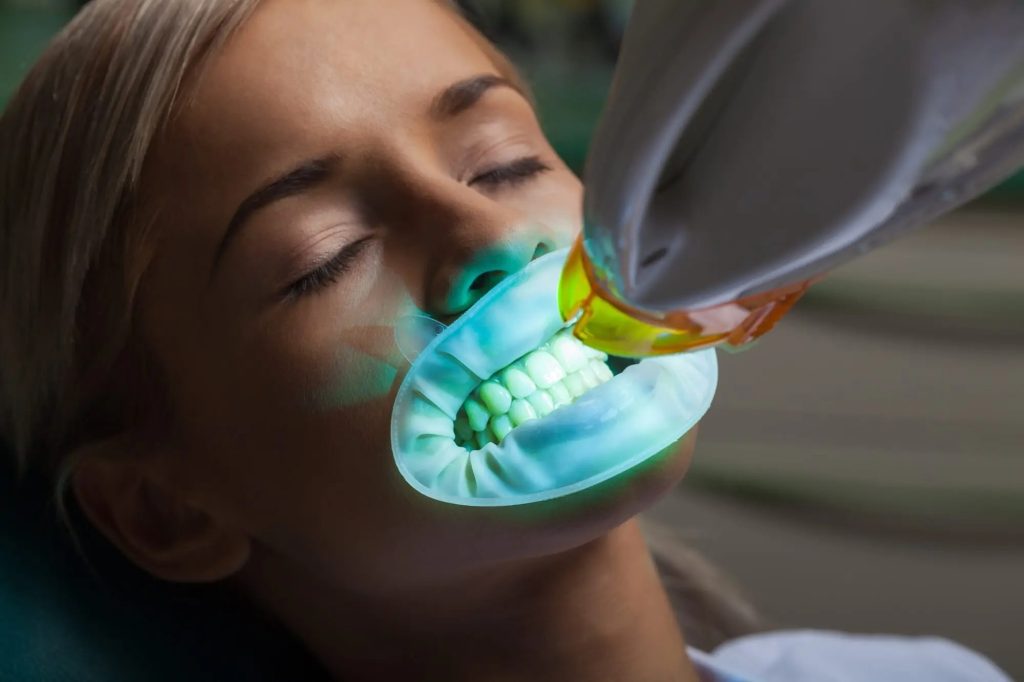
In-office professional whitening
- Consultation & shade assessment
Oral health is evaluated and tooth color recorded. - Cleaning & preparation
Plaque is removed and teeth polished. - Gum protection
A barrier is applied to protect soft tissues. - Whitening gel application
A peroxide-based gel (15–35%) is applied. - Light or laser activation (optional)
Speeds up the whitening process. - Multiple cycles
Gel is applied in 15–20 minute intervals. - Final rinse & evaluation
The procedure takes about 60–90 minutes, and results are visible immediately.
Aftercare tips
- Avoid staining foods and drinks for 24–48 hours.
- Use desensitizing toothpaste if sensitivity occurs.
- Maintain oral hygiene and schedule regular dental visits.

Teeth Whitening in Turkey
Turkey has become a leading destination for cosmetic dental treatments, including teeth whitening. Cities like Istanbul offer modern clinics, experienced dentists, and advanced whitening technologies.
Why patients choose Turkey
- Affordable pricing
- Modern dental clinics with advanced laser whitening systems
- Experienced professionals trained to international standards
- Dental tourism packages including consultation and follow-up
- English-speaking staff in many clinics
Patients can save up to 80% while receiving high-quality treatment and enjoying travel opportunities.
Teeth whitening is a safe and effective way to enhance your smile when performed properly and supported by good oral care habits.
Professional treatments can provide long-lasting brightness, while at-home options offer convenience for maintenance. By following professional advice and maintaining healthy habits, you can enjoy a radiant smile for years to come.
This article is for informational purposes only. Consult a qualified dental professional to determine the most suitable treatment for your needs.