Low back pain is a common health problem with serious social and economic consequences. 85% of people experience low back pain at some point in their lives. In Turkey, this rate is approximately 75–80%. this rate is at the level of 75–80%.
A sedentary lifestyle, excess weight, a stressful work environment, incorrect sitting habits, and smoking increase the risk of herniated discs. In the treatment of a herniated disc, the basic approach should be to consider surgery as a last resort, except in some special cases. So, how is non-surgical herniated disc treatment performed?
Herniated Disc Treatment
85–90% of pain related to herniated discs can be treated with methods such as medication, physical therapy, exercise, behavioral therapy, and manual therapy. In patients who do not show improvement within 3–4 weeks despite these sessions, interventional treatment methods may be preferred.
If there are no special conditions such as nerve damage due to the herniation, foot drop, or urinary or fecal incontinence, surgery should be considered as the last option.
In the treatment of herniated discs, non-surgical, new, and successful methods are being applied. In these methods, the level of the herniation and the nerve causing the pain are identified.
Therapeutic medications are administered directly into the herniated disc or around the affected nerve using thin needles. The first of these procedures, which are quite safe when performed by experienced specialists, is the epidural injection method. The second includes ozone and radiofrequency applications into the herniation. The third is stem cell treatment.
How Is Non-Surgical Herniated Disc Treatment Performed?
Non-surgical herniated disc treatment is carried out with a personalized approach according to the patient’s condition.
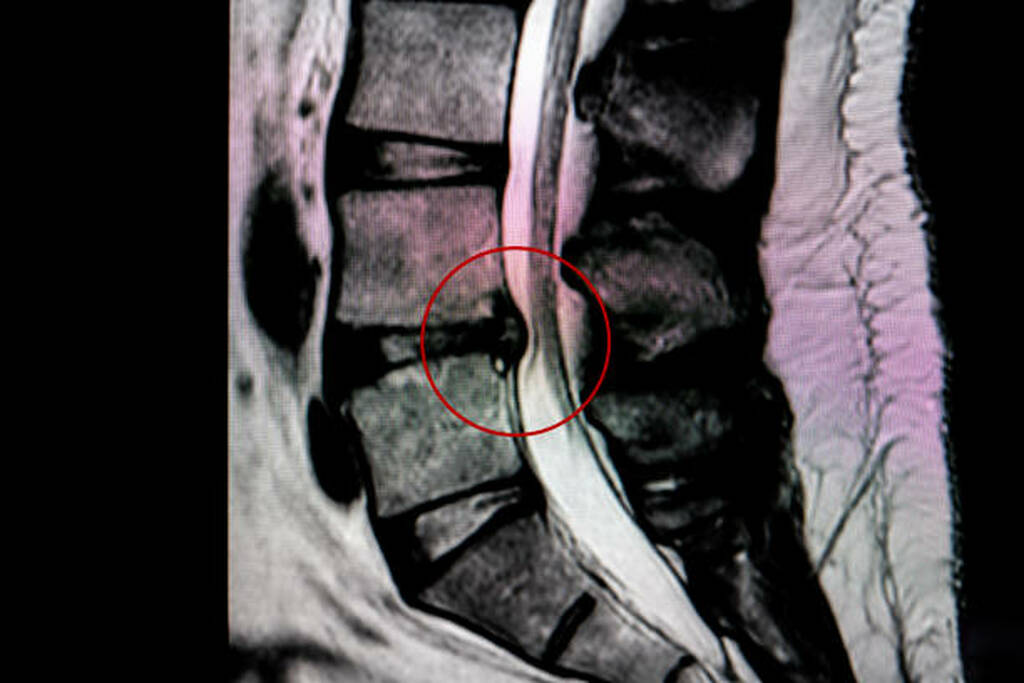
First, the location and severity of the herniation are determined through a detailed examination and imaging techniques (MRI or CT). Then, conservative methods are initiated: pain-relieving medications, physiotherapy sessions, and special exercise programs are applied.
When these methods are insufficient, interventional techniques are preferred. For example, inflammation in the nerve roots is reduced with an epidural injection, while ozone therapy is believed to support tissue healing by improving oxygen delivery.
Radiofrequency ablation provides long-term pain control by targeting nerve endings. Innovative approaches such as stem cell treatment naturally repair damaged discs. These treatments are generally performed on an outpatient basis, and patients can be discharged on the same day. Thus, surgical risks are avoided, and rapid recovery is achieved without affecting daily life.

What Is an Epidural Injection?
An epidural injection is a minimally invasive treatment method used to reduce inflammation and edema in the nerve roots caused by a herniated disc. In this procedure, anti-inflammatory medications are injected into the outer layer of the spinal canal (the epidural space).
Especially effective in conditions such as herniated discs, spinal stenosis, or disc herniation, epidural injection is one of the most frequently preferred options among non-surgical herniated disc treatments.
This method rapidly alleviates pain and improves patients’ quality of life, and it is generally combined with physical therapy to achieve long-term results.
How Is an Epidural Injection Performed?
Epidural injections are applied in three different ways: injection can be performed from the middle part of the lower back (interlaminar), from the tailbone (caudal), or directly into the nerve root area at the level of the herniation (transforaminal).
In recent years, the most preferred method has been the transforaminal epidural injection. This procedure is performed under C-arm fluoroscopy, a special imaging device, and takes an average of 15–20 minutes.
The most commonly used medications in targeted treatments are corticosteroids and local anesthetic drugs. These medications help eliminate edema, inflammation, and adhesions around the nerve and the herniation. In the transforaminal epidural injection method, the medication dose is kept at the lowest level while the success rate of the treatment is quite high.
In epidural treatments, radiofrequency treatment can also be applied in addition to medication. This method is preferred in patients who do not benefit from conventional treatments, who have undergone several surgeries, and for whom the use of corticosteroids and anesthetic drugs is contraindicated.
Since the injection procedure is performed under C-arm fluoroscopy, the entry of the needle into the nerve root area and the spread of the contrast agent can be monitored live on the screen, which makes the procedure very safe.
How Many Years Does the Effect of an Epidural Injection Last?
The effect of an epidural injection varies depending on the patient’s general health condition, the severity of the herniation, and lifestyle. Generally, pain relief after the first injection lasts between 3–6 months, but in some cases, this period may extend up to 1 year.
In a large proportion of patients, pain disappears after the first session. In cases where improvement is not achieved, the procedure can be repeated 3–4 times a year.
For long-term effectiveness, it is recommended to support the injection with physical therapy and exercise programs. Repeated sessions can provide pain control for up to 2–3 years in chronic herniated disc cases; however, consulting a specialist physician is essential for individual results.