Liposuction is a cosmetic surgical procedure aimed at removing localized fat deposits that accumulate in specific areas of the body and are resistant to diet and exercise. This procedure is not intended for weight loss; rather, it is performed to achieve more balanced body contours and a more aesthetically pleasing appearance.
In suitable candidates, liposuction can provide long-lasting contour improvements. The success of the procedure is directly related to maintaining healthy lifestyle habits after surgery. This article provides detailed information about the liposuction process.
What Is Liposuction?
Liposuction, medically referred to as lipoplasty, is a procedure in which excess fat cells are removed from the body through suction. This method targets fat deposits that accumulate in areas such as the abdomen, hips, thighs, arms, neck, back, or chin.
During the procedure, body contours are improved by reducing the number of fat cells, resulting in a more aesthetic appearance. Because fat cells are permanently removed, the results can be long-lasting as long as body weight remains stable.
However, liposuction is not a treatment for obesity or a general weight-loss method. Ideal candidates are individuals who are at a healthy weight but have localized fat deposits that are resistant to diet and exercise.
The results of liposuction may vary depending on skin elasticity. Skin with good elasticity typically adapts smoothly to the new contours after the procedure, while skin with poor elasticity may develop looseness or laxity.
Liposuction does not eliminate cellulite, stretch marks, or surface irregularities of the skin; it only reduces the thickness of the underlying fat layer.
Historically, liposuction has been evolving since the 1970s and has become safer over time with the support of various advanced technologies.
Before undergoing liposuction, a patient’s overall health status is carefully evaluated. Conditions such as heart disease, diabetes, or immune system disorders may increase surgical risks. For this reason, the patient’s medical history is reviewed in detail and any necessary tests are performed prior to the procedure.
The primary goal of liposuction is to balance body proportions. For example, fat accumulation in the abdominal area can be reduced to slim the waistline and create a more symmetrical silhouette.
Liposuction may also be used in conditions such as gynecomastia in men, by reducing excess breast tissue and improving chest contour.
Overall, liposuction is considered a part of body contouring surgery and may be combined with other procedures, such as a tummy tuck. However, since each individual’s anatomy is unique, results may vary from person to person.
How Is Liposuction Performed?
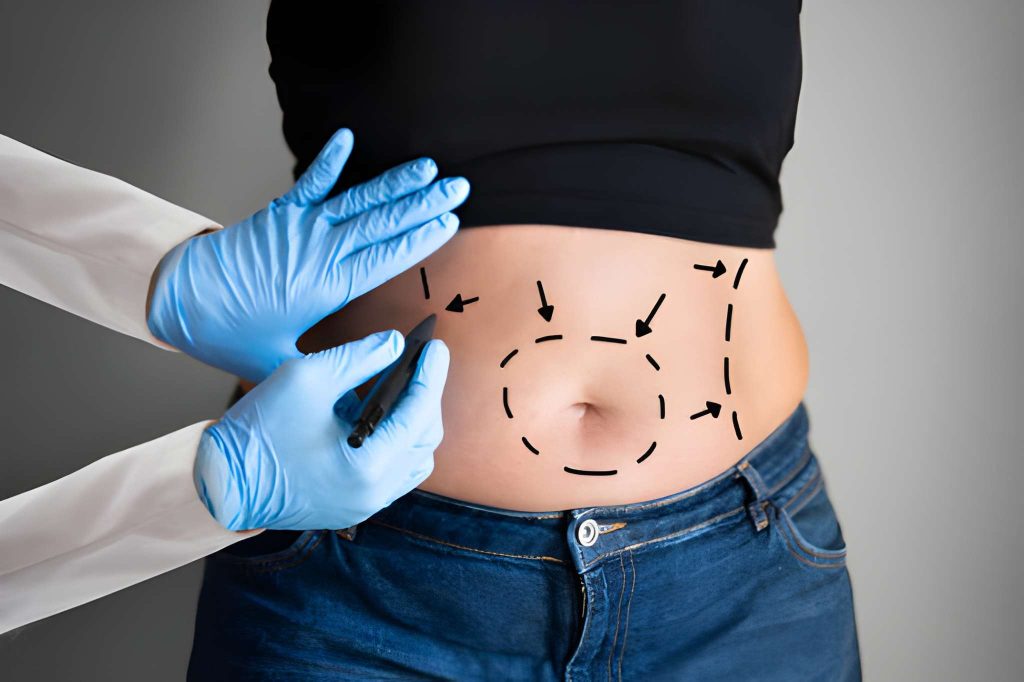
The liposuction procedure is performed in a surgical setting and consists of several basic steps. First, the patient is administered anesthesia.
Depending on the scope of the procedure, local anesthesia, regional anesthesia, or general anesthesia may be used. While local anesthesia may be sufficient for small treatment areas, larger areas typically require general anesthesia.
The procedure begins with the injection of a solution containing saline, analgesic medications, and vasoconstrictor agents into the targeted area. This solution causes the fat cells to swell, making them easier to separate while also reducing bleeding. Small incisions are then made in the skin, and a thin tube called a cannula is inserted into the fat layer.
The cannula is connected to a vacuum device and uses controlled back-and-forth movements to break down and suction out fat cells. Depending on the volume of fat removed, this process may take several hours.
Several liposuction techniques are available. The most commonly used method is suction-assisted liposuction (SAL), which involves the use of a manual cannula.
Ultrasound-assisted liposuction (UAL) uses ultrasound energy to liquefy fat cells and is particularly suitable for fibrous or dense fat tissue.
Laser-assisted liposuction (LAL) uses laser energy to melt fat and may also contribute to mild skin tightening.
Power-assisted liposuction (PAL) employs a vibrating cannula to allow more precise fat removal and offers advantages in difficult-to-treat areas. The choice of technique depends on the surgeon’s experience and the patient’s individual needs.
Throughout the procedure, vital signs are closely monitored and fluid balance is carefully maintained. Although liposuction is considered minimally invasive, it still carries surgical risks, making sterile conditions essential.
How Many Kilograms of Fat Can Be Removed With Liposuction?
The amount of fat that can be safely removed during liposuction is limited based on patient safety and overall health. Generally, up to 5 liters of fat (approximately 4–5 kilograms) can be safely removed in a single session. This limit is set to prevent fluid imbalance and reduce the risk of complications. Removing larger volumes of fat may require multiple sessions or may significantly increase surgical risks.
The amount of fat removed varies depending on the patient’s body mass index and the targeted areas. For example, 0.5–1 kilogram of fat may be sufficient in a small chin liposuction, while 3–4 kilograms may be removed from areas such as the abdomen and hips.
Excessive fat removal may lead to serious complications such as shock or organ-related problems. Candidates should be close to their ideal body weight, as liposuction is intended for contouring rather than weight loss. Final results depend on the distribution of remaining fat cells, and future weight gain may cause these cells to enlarge.
Liposuction Recovery Process
Recovery after liposuction varies depending on the extent of the procedure. Immediately after surgery, pain, swelling, and bruising may occur; these symptoms are typically managed with prescribed pain medications.
Drainage tubes may be used to allow excess fluid to exit through the incisions, and antibiotics may be prescribed to reduce the risk of infection. Compression garments are worn for approximately 4–6 weeks to help control swelling and allow the skin to adapt to the new body contours.
Rest is recommended during the first few days following the procedure, and most patients can return to desk or office work within several days.
Full physical activity generally resumes within 2–4 weeks, while exercise is typically permitted after 4–6 weeks. Swelling gradually subsides over a period of 3–6 months, and final results become fully visible by the end of this time.
Liposuction scars are usually small and fade over time. Patients are advised to increase fluid intake and avoid salty foods during the recovery period.
Potential complications may include irregular body contours, temporary or permanent loss of sensation, fluid accumulation, or infection. In rare cases, serious complications such as fat embolism or organ damage may occur. Maintaining a healthy diet and engaging in light walking can help support the healing process after liposuction.
Liposuction in Turkey
Liposuction is a widely performed procedure in Turkey within the field of aesthetic surgery. The country is home to internationally trained surgeons and modern medical facilities. Clinics regulated by the Ministry of Health ensure high safety standards, and liposuction procedures are carried out in accredited hospitals where patient safety is a top priority.