For many years, surgeries such as removing the entire kidney or only the tumorous part in patients with kidney tumors, as well as removing a non-functioning kidney, were performed using open surgery. However, with the development of laparoscopic (minimally invasive) surgical techniques, laparoscopic surgery has begun to replace open surgery in the field of urology. So, what is laparoscopic kidney surgery?
Today, this technique has become standard in the United States and European countries. Despite this, open surgery is still performed in many centers in our country. This is due not only to a lack of equipment but also to the limited number of experienced urologists trained in this field.
What Is Laparoscopic Kidney Surgery?
Laparoscopic kidney surgery is a closed surgical method performed by making a few small incisions (approximately 1 cm) in the abdominal area and using long surgical instruments and a camera system.
With this technique, the complete removal of a non-functioning kidney is called “laparoscopic nephrectomy,” the removal of the entire kidney in cases of large tumors is called “laparoscopic radical nephrectomy,” and in cases of small tumors, the operation in which only the tumor and a limited part of the kidney are removed is called “laparoscopic partial nephrectomy.”
In addition, surgery performed to correct a narrowing in the kidney’s drainage system is called “laparoscopic pyeloplasty.” These methods accelerate the recovery process of patients and reduce the risk of complications thanks to the minimally invasive approach.
How Many Hours Does Laparoscopic Kidney Surgery Take?
The duration of laparoscopic kidney surgery varies depending on the type of surgery, the patient’s condition, and the surgeon’s experience. For example, procedures such as laparoscopic nephrectomy or pyeloplasty generally take between 1 and 3 hours.
In more complex cases, such as laparoscopic radical nephrectomy or partial nephrectomy, the duration may extend up to 2–4 hours.
When performed by experienced surgeons and using advanced techniques, these durations may be shortened. Thus, patients receive less anesthesia, and the recovery process accelerates. During preoperative evaluations, your surgeon will provide detailed information about the estimated duration.

Advantages of Laparoscopy
One of the most important advantages of laparoscopic kidney surgeries is that very small incisions are made instead of the large 20–40 cm incisions used in traditional open surgeries. This not only provides an aesthetic improvement but also ensures faster and smoother wound healing.
This advantage is especially more pronounced in individuals such as diabetic patients, in whom wound closure is delayed or the risk of infection is high. In addition, the length of hospital stay is shortened, and patients can return to their daily activities and work earlier.
Postoperative pain levels are low, which means less need for pain medications. Since surgery times are shorter compared to open methods in experienced surgeons, exposure to anesthesia is also reduced.
Are All Kidney Cysts or Masses Malignant?
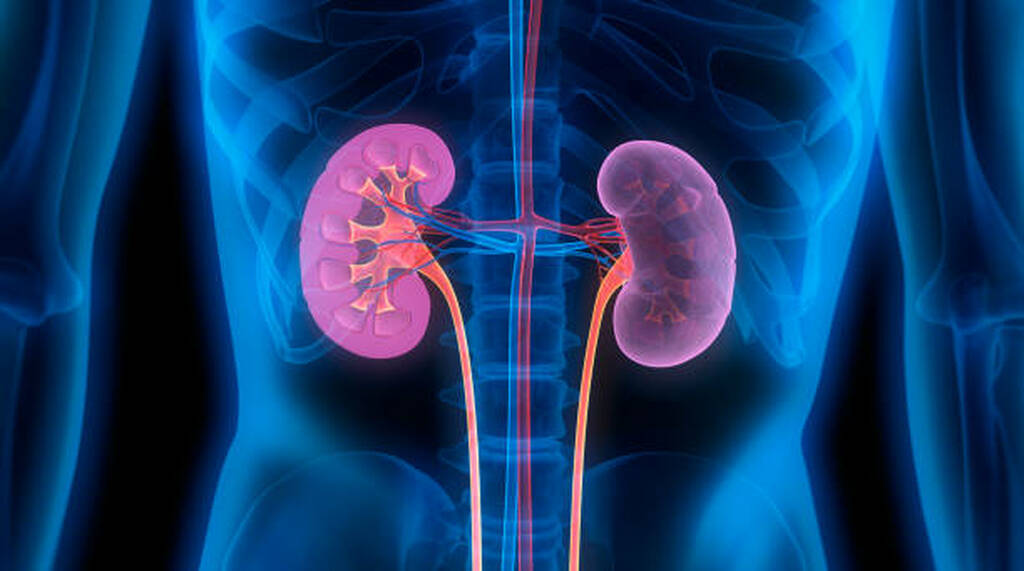
Some of the masses seen in the kidney may be cystic (fluid-filled sacs), while others may have a tissue-like consistency. Some kidney cysts, and the most common type in society called “simple cysts,” usually do not cause any harm to the patient and do not require treatment.
They also do not carry a risk of turning into cancer. However, some of the cysts that we define as “complex cysts” may already contain cancer cells or may show cancerous transformation over time.
Masses with a tissue-like consistency show great diversity; among them, there are benign ones as well as many types of malignant kidney tumors.
It is difficult to definitively distinguish whether these masses are benign or malignant using imaging methods such as ultrasound, CT scans, or MRI. A clear distinction can be made only in a limited number of cases. Therefore, further examinations and biopsy may be required.
In Which Cases Is Surgery Necessary?
As mentioned above, if there is a mass in the kidney that is suspected to be malignant, it must be surgically removed. This is because these conditions cannot be effectively treated with medication.
The type of surgery to be performed is decided by considering the location and size of the tumor within the kidney.
If possible, an operation in which only the tumor is removed while preserving the kidney (laparoscopic partial nephrectomy) is performed. If the tumor covers a large portion of the kidney, then the tumor must be removed together with the kidney (laparoscopic radical nephrectomy).
Apart from tumors, in cases where a kidney is non-functioning, the decision for surgery is made by evaluating several criteria.
If the non-functioning kidney causes continuous infection, pain, or high blood pressure, then removal of the kidney (laparoscopic nephrectomy) is appropriate. If it causes none of these but contains stones or is severely swollen, surgery is still required.
In congenitally small kidneys, if the above conditions are not present, surgery is not necessary. In kidney cysts that we call simple cysts, when the cyst reaches a certain size, it may again need to be removed using a laparoscopic method.
In kidney channel strictures that are mostly detected at a young age, an examination called scintigraphy is performed to evaluate whether this narrowing causes damage to the kidney. When surgery is indicated based on this test, the narrowed segment of the kidney’s drainage system is removed laparoscopically, the remaining parts are reconnected, and normal kidney function is restored.